Sale!
,

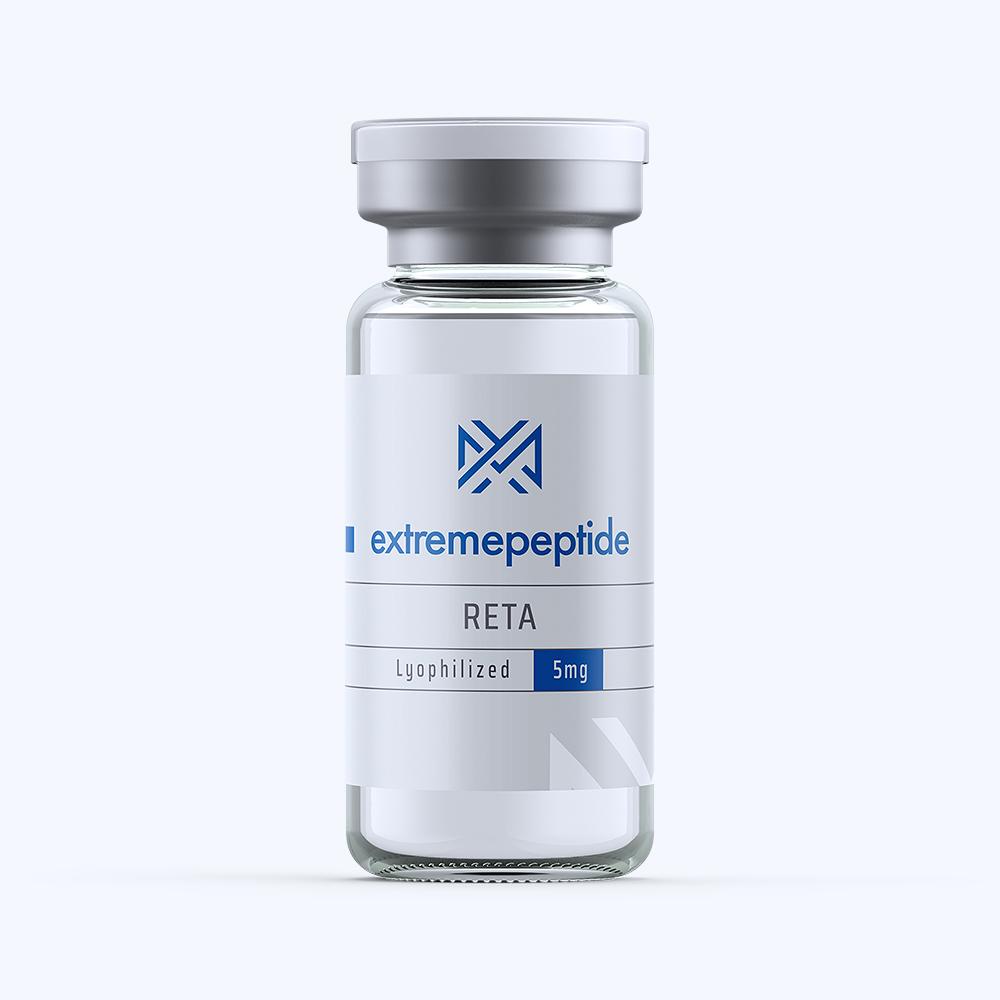
Reta (GLP-1/GIP/GCG) 5mg

Original price was: $169.99.Current price is: $129.99.

& Free Shipping
Guaranteed Safe Checkout

Reta (GLP-1/GIP/GCG) 5mg – A Next-Generation Triple Agonist for Advanced Metabolic Support

H2: What Is Reta (GLP-1/GIP/GCG) 5mg?

Reta (GLP-1/GIP/GCG) 5mg is an innovative triple receptor agonist designed to target three key metabolic pathways simultaneously: Glucagon-Like Peptide-1 (GLP-1), Glucose-Dependent Insulinotropic Polypeptide (GIP), and Glucagon (GCG) receptors. This advanced mechanism of action has attracted significant attention in metabolic and obesity research due to its potential to support weight management, glucose regulation, and overall metabolic health.

Unlike traditional single-pathway therapies, Reta 5mg leverages the synergistic effects of three hormone receptors involved in appetite control, energy expenditure, and insulin sensitivity. By activating these pathways together, researchers are exploring its potential benefits for improving body composition and supporting healthy metabolic function.


H2: How Does Reta (GLP-1/GIP/GCG) 5mg Work?

Reta 5mg works through a unique triple-agonist mechanism that combines the benefits of GLP-1, GIP, and glucagon receptor activation.

H3: GLP-1 Receptor Activation

GLP-1 receptor stimulation helps regulate appetite, promotes feelings of fullness, and supports healthy blood glucose control. This pathway has become widely recognized for its role in modern weight management and metabolic research.

H3: GIP Receptor Activation

GIP receptor activity may enhance insulin responsiveness and contribute to improved metabolic efficiency. Researchers believe this pathway can complement GLP-1 activity by supporting nutrient utilization and energy balance.

H3: Glucagon Receptor Activation

The glucagon component is designed to increase energy expenditure and support fat metabolism. This additional mechanism distinguishes Reta from many other metabolic compounds by potentially enhancing calorie utilization while preserving metabolic flexibility.

Together, these three pathways create a comprehensive approach to metabolic support that is currently being investigated in various research settings.


H2: Potential Benefits of Reta (GLP-1/GIP/GCG) 5mg

H3: Enhanced Weight Management Support

One of the primary areas of interest surrounding Reta 5mg is its potential role in supporting significant weight reduction through appetite regulation and increased energy expenditure.

H3: Improved Metabolic Function

The combined activation of GLP-1, GIP, and glucagon receptors may contribute to improved metabolic efficiency, helping the body better regulate energy utilization and glucose metabolism.

H3: Appetite and Craving Control

Research suggests that receptor activation may help reduce hunger signals and improve satiety, supporting healthier dietary habits and caloric intake management.

H3: Energy Expenditure Enhancement

Unlike many single-pathway compounds, the glucagon receptor component may help increase calorie burning and fat oxidation, making Reta a unique candidate in metabolic research.

H3: Support for Insulin Sensitivity

The interaction between GLP-1 and GIP pathways may contribute to improved insulin responsiveness, which is a key factor in maintaining healthy metabolic function.


H2: Why Reta (GLP-1/GIP/GCG) 5mg Stands Out

Reta (GLP-1/GIP/GCG) 5mg represents a new generation of metabolic research compounds because it addresses multiple biological pathways simultaneously. Its triple-agonist design differentiates it from traditional GLP-1 receptor agonists by combining appetite regulation, enhanced insulin signaling, and increased energy expenditure into a single mechanism.

Researchers and healthcare professionals continue to monitor developments surrounding triple receptor agonists due to their promising potential in the evolving field of metabolic health. As scientific understanding advances, Reta 5mg remains a notable compound for those interested in cutting-edge metabolic and weight management research.


H2: Conclusion

Reta (GLP-1/GIP/GCG) 5mg is a highly advanced triple receptor agonist that combines GLP-1, GIP, and glucagon receptor activation to support multiple aspects of metabolic health. With its innovative approach to appetite regulation, energy expenditure, glucose control, and weight management, it has become a subject of growing interest in the metabolic research community. Its unique triple-action mechanism positions Reta 5mg as a promising development in the future of metabolic science and obesity-related research.
CID

171390338

CAS

2381089-83-2

InChI

InChI=1S/C221H342N46O68/c1-23-124(11)179(208(322)241-144(83-88-176(291)292)192(306)245-150(105-134-69-75-137(276)76-70-134)196(310)244-148(100-121(5)6)194(308)243-147(99-120(3)4)193(307)240-142(82-87-175(289)290)187(301)230-110-169(282)229-113-173(286)264-92-51-61-161(264)206(320)253-158(116-270)203(317)251-157(115-269)189(303)232-111-170(283)233-128(15)212(326)266-94-53-63-163(266)214(328)267-95-54-64-164(267)213(327)265-93-52-62-162(265)207(321)250-156(114-268)183(226)297)258-200(314)152(103-131-55-41-39-42-56-131)242-185(299)127(14)235-216(331)219(18, 19)262-205(319)145(80-85-166(225)279)237-184(298)126(13)234-190(304)140(60-48-50-90-227-172(285)119-335-98-97-334-96-91-228-167(280)86-81-146(215(329)330)236-168(281)65-45-37-35-33-31-29-27-25-26-28-30-32-34-36-38-46-66-174(287)288)238-191(305)141(59-47-49-89-222)239-198(312)154(107-177(293)294)247-195(309)149(101-122(7)8)256-218(333)221(22, 109-123(9)10)263-211(325)180(125(12)24-2)259-204(318)160(118-272)252-197(311)151(106-135-71-77-138(277)78-72-135)246-199(313)155(108-178(295)296)248-202(316)159(117-271)254-210(324)182(130(17)274)260-201(315)153(104-132-57-43-40-44-58-132)249-209(323)181(129(16)273)257-171(284)112-231-188(302)143(79-84-165(224)278)255-217(332)220(20, 21)261-186(300)139(223)102-133-67-73-136(275)74-68-133/h39-44, 55-58, 67-78, 120-130, 139-164, 179-182, 268-277H, 23-38, 45-54, 59-66, 79-119, 222-223H2, 1-22H3, (H2, 224, 278)(H2, 225, 279)(H2, 226, 297)(H, 227, 285)(H, 228, 280)(H, 229, 282)(H, 230, 301)(H, 231, 302)(H, 232, 303)(H, 233, 283)(H, 234, 304)(H, 235, 331)(H, 236, 281)(H, 237, 298)(H, 238, 305)(H, 239, 312)(H, 240, 307)(H, 241, 322)(H, 242, 299)(H, 243, 308)(H, 244, 310)(H, 245, 306)(H, 246, 313)(H, 247, 309)(H, 248, 316)(H, 249, 323)(H, 250, 321)(H, 251, 317)(H, 252, 311)(H, 253, 320)(H, 254, 324)(H, 255, 332)(H, 256, 333)(H, 257, 284)(H, 258, 314)(H, 259, 318)(H, 260, 315)(H, 261, 300)(H, 262, 319)(H, 263, 325)(H, 287, 288)(H, 289, 290)(H, 291, 292)(H, 293, 294)(H, 295, 296)(H, 329, 330)/t124-, 125-, 126-, 127-, 128-, 129+, 130+, 139-, 140-, 141-, 142-, 143-, 144-, 145-, 146-, 147-, 148-, 149-, 150-, 151-, 152-, 153-, 154-, 155-, 156-, 157-, 158-, 159-, 160-, 161-, 162-, 163-, 164-, 179?, 180?, 181-, 182-, 221+/m0/s1

IUPAC Name

20-[[(1S)-4-[2-[2-[2-[[(5S)-5-[[(2S)-6-amino-2-[[(2S)-2-[[(2S)-2-[[(2R)-2-[[(3S)-2-[[(2S)-2-[[(2S)-2-[[(2S)-2-[[(2S)-2-[[(2S, 3R)-2-[[(2S)-2-[[(2S, 3R)-2-[[2-[[(2S)-5-amino-2-[[2-[[(2S)-2-amino-3-(4-hydroxyphenyl)propanoyl]amino]-2-methylpropanoyl]amino]-5-oxopentanoyl]amino]acetyl]amino]-3-hydroxybutanoyl]amino]-3-phenylpropanoyl]amino]-3-hydroxybutanoyl]amino]-3-hydroxypropanoyl]amino]-3-carboxypropanoyl]amino]-3-(4-hydroxyphenyl)propanoyl]amino]-3-hydroxypropanoyl]amino]-3-methylpentanoyl]amino]-2, 4-dimethylpentanoyl]amino]-4-methylpentanoyl]amino]-3-carboxypropanoyl]amino]hexanoyl]amino]-6-[[(2S)-1-[[(2S)-5-amino-1-[[1-[[(2S)-1-[[(2S)-1-[[(3S)-1-[[(2S)-1-[[(2S)-1-[[(2S)-1-[[(2S)-1-[[(2S)-1-[[2-[[2-[(2S)-2-[[(2S)-1-[[(2S)-1-[[2-[[(2S)-1-[(2S)-2-[(2S)-2-[(2S)-2-[[(2S)-1-amino-3-hydroxy-1-oxopropan-2-yl]carbamoyl]pyrrolidine-1-carbonyl]pyrrolidine-1-carbonyl]pyrrolidin-1-yl]-1-oxopropan-2-yl]amino]-2-oxoethyl]amino]-3-hydroxy-1-oxopropan-2-yl]amino]-3-hydroxy-1-oxopropan-2-yl]carbamoyl]pyrrolidin-1-yl]-2-oxoethyl]amino]-2-oxoethyl]amino]-4-carboxy-1-oxobutan-2-yl]amino]-4-methyl-1-oxopentan-2-yl]amino]-4-methyl-1-oxopentan-2-yl]amino]-3-(4-hydroxyphenyl)-1-oxopropan-2-yl]amino]-4-carboxy-1-oxobutan-2-yl]amino]-3-methyl-1-oxopentan-2-yl]amino]-1-oxo-3-phenylpropan-2-yl]amino]-1-oxopropan-2-yl]amino]-2-methyl-1-oxopropan-2-yl]amino]-1, 5-dioxopentan-2-yl]amino]-1-oxopropan-2-yl]amino]-6-oxohexyl]amino]-2-oxoethoxy]ethoxy]ethylamino]-1-carboxy-4-oxobutyl]amino]-20-oxoicosanoic acid

Molecular Formula

C221H342N46O68

Molecular Weight

4731

Monoisotopic Mass

4728.4717592

Polar Area

1780

Complexity

11500

XLogP

-6.3

Heavy Atom Count

355

Hydrogen Bond Donor Count

58

Hydrogen Bond Acceptor Count

70

Rotatable Bond Count

159

Physical Appearance

Fine White Lyophilized Powder

Stability

Lyophilized protein is to be stored at -20°C. It is recommended to aliquot the reconstituted (dissolved) protein into several discrete vials in order to avoid repeated freezing and thawing. Reconstituted protein can be stored at 4°C