Sale!
,

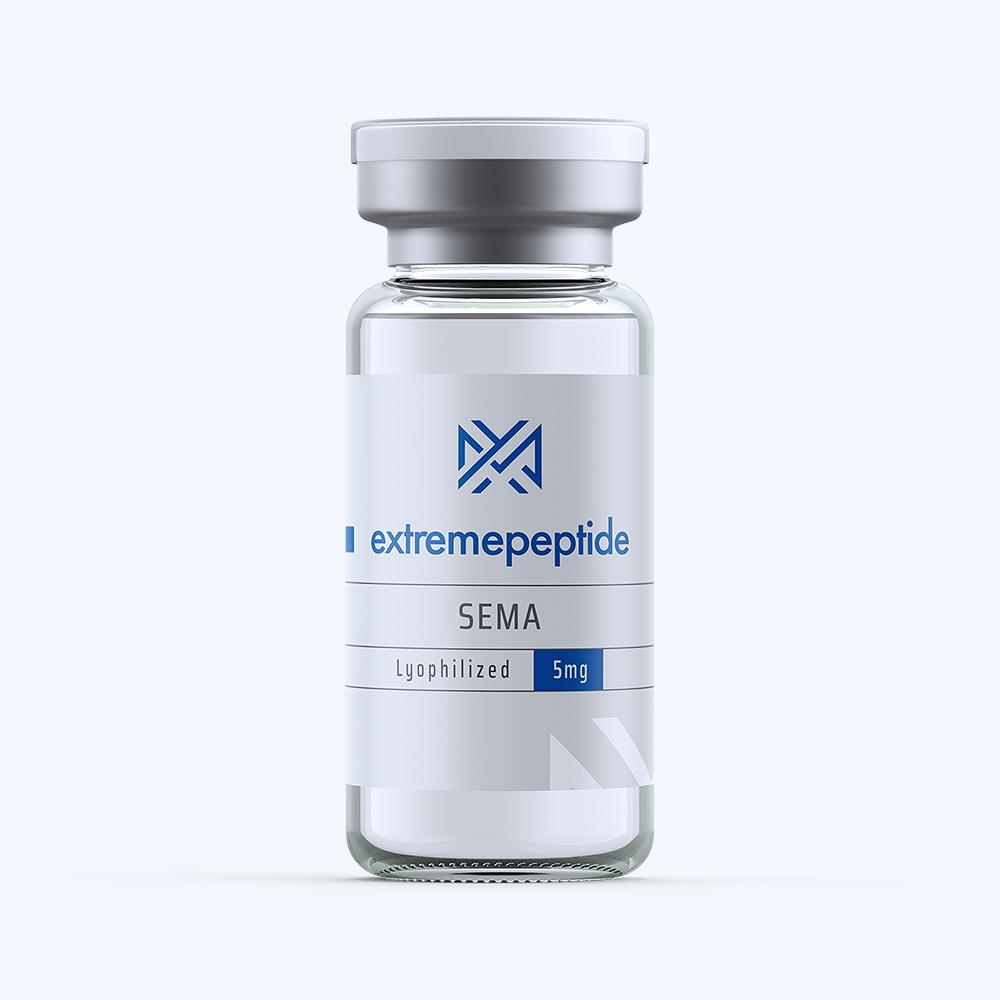
Sema (GLP-1 RA)

Original price was: $169.00.Current price is: $109.00.

& Free Shipping
Guaranteed Safe Checkout

Semaglutide (GLP-1 Receptor Agonist): Comprehensive Overview, Benefits, and Clinical Insights

Sema (GLP-1 RA) Semaglutide, often referred to as “Sema,” is a glucagon-like peptide-1 receptor agonist (GLP-1 RA) widely used in modern medical practice for the management of type 2 diabetes and, more recently, weight management. It has gained significant attention due to its effectiveness in improving glycemic control, supporting weight reduction, and reducing cardiovascular risk factors in appropriate patients Sema (GLP-1 RA) .

This article provides a professional, SEO-optimized overview of semaglutide, including its mechanism of action, clinical benefits, usage considerations, and safety profile Sema (GLP-1 RA).


H2: What is Semaglutide (Sema)?

Semaglutide is a long-acting GLP-1 receptor agonist that mimics the natural hormone GLP-1 (glucagon-like peptide-1). This hormone plays a crucial role in regulating blood sugar levels, appetite, and digestion.

It is commonly prescribed under brand formulations for:

  • Type 2 diabetes management
  • Chronic weight management (obesity or overweight with comorbidities)

By activating GLP-1 receptors, semaglutide enhances insulin secretion, suppresses glucagon release, and slows gastric emptying, resulting in improved metabolic control.


H3: Mechanism of Action of GLP-1 RA (Semaglutide)

Semaglutide works through multiple physiological pathways:

  1. Glucose-dependent insulin secretion
    It stimulates insulin release only when blood glucose levels are elevated, reducing the risk of hypoglycemia.
  2. Glucagon suppression
    It decreases glucagon secretion, which helps reduce excessive glucose production by the liver.
  3. Appetite regulation
    It acts on the brain’s appetite centers, leading to reduced hunger and caloric intake.
  4. Delayed gastric emptying
    Food digestion slows down, increasing satiety and contributing to weight loss.

These combined effects make semaglutide one of the most effective GLP-1 receptor agonists currently available.


H2: Clinical Benefits of Semaglutide

Semaglutide offers multiple clinically proven benefits, making it a preferred option in metabolic therapy.

H3: 1. Improved Glycemic Control

Patients with type 2 diabetes experience significant reductions in HbA1c levels. This improves long-term glucose stability and reduces the risk of diabetes-related complications.

H3: 2. Weight Reduction

One of the most notable effects of semaglutide is weight loss. By reducing appetite and food intake, patients often achieve clinically meaningful reductions in body weight when combined with lifestyle modifications.

H3: 3. Cardiovascular Protection

Studies indicate that semaglutide may lower the risk of major cardiovascular events such as heart attack and stroke in high-risk individuals with type 2 diabetes.

H3: 4. Metabolic Improvements

It may also improve blood pressure, lipid profiles, and overall metabolic health, contributing to reduced cardiometabolic risk.


H2: Safety Profile and Common Side Effects

Like all medications, semaglutide may cause side effects, although many patients tolerate it well.

H3: Common Side Effects

  • Nausea
  • Vomiting
  • Diarrhea or constipation
  • Reduced appetite
  • Mild abdominal discomfort

These effects are usually temporary and tend to improve as the body adjusts to the medication.

H3: Important Precautions

  • Sema (GLP-1 RA) Not recommended for individuals with a personal or family history of medullary thyroid carcinoma
  • Should be used cautiously in patients with pancreatitis history
  • Dose escalation should be gradual under medical supervision

Patients should always follow healthcare provider instructions to ensure safe and effective use.


H2: Who Can Benefit from Semaglutide?

Semaglutide is typically recommended for:

  • Adults with type 2 diabetes requiring better glycemic control
  • Individuals with obesity or overweight with weight-related conditions
  • Patients at high cardiovascular risk under medical evaluation

It is not intended for type 1 diabetes or as a first-line treatment without clinical indication Sema (GLP-1 RA).


H4: Conclusion

Semaglutide (GLP-1 RA) represents a major advancement in metabolic and weight management therapy. Its multi-mechanistic approach—targeting insulin secretion, appetite regulation, and cardiovascular protection—makes it a powerful option in modern clinical practice. However, its use must be guided by healthcare professionals to ensure safety, effectiveness, and individualized treatment outcomes.
CID

56843331

CAS

910463-68-2

InChI

InChI=1S/C187H291N45O59/c1-18-105(10)154(180(282)208-108(13)159(261)216-133(86-114-89-200-119-50-40-39-49-117(114)119)170(272)218-129(82-102(4)5)171(273)228-152(103(6)7)178(280)215-121(53-44-72-199-186(192)193)162(264)201-91-141(242)209-120(52-43-71-198-185(190)191)161(263)204-94-151(257)258)230-172(274)131(83-111-45-33-31-34-46-111)219-167(269)126(64-69-149(253)254)214-166(268)122(51-41-42-70-195-144(245)98-290-79-78-289-76-74-197-145(246)99-291-80-77-288-75-73-196-139(240)66-61-127(183(285)286)211-140(241)54-37-29-27-25-23-21-19-20-22-24-26-28-30-38-55-146(247)248)212-158(260)107(12)206-157(259)106(11)207-165(267)125(60-65-138(189)239)210-142(243)92-202-163(265)123(62-67-147(249)250)213-168(270)128(81-101(2)3)217-169(271)130(85-113-56-58-116(238)59-57-113)220-175(277)135(95-233)223-177(279)137(97-235)224-179(281)153(104(8)9)229-174(276)134(88-150(255)256)221-176(278)136(96-234)225-182(284)156(110(15)237)231-173(275)132(84-112-47-35-32-36-48-112)222-181(283)155(109(14)236)227-143(244)93-203-164(266)124(63-68-148(251)252)226-184(287)187(16, 17)232-160(262)118(188)87-115-90-194-100-205-115/h31-36, 39-40, 45-50, 56-59, 89-90, 100-110, 118, 120-137, 152-156, 200, 233-238H, 18-30, 37-38, 41-44, 51-55, 60-88, 91-99, 188H2, 1-17H3, (H2, 189, 239)(H, 194, 205)(H, 195, 245)(H, 196, 240)(H, 197, 246)(H, 201, 264)(H, 202, 265)(H, 203, 266)(H, 204, 263)(H, 206, 259)(H, 207, 267)(H, 208, 282)(H, 209, 242)(H, 210, 243)(H, 211, 241)(H, 212, 260)(H, 213, 270)(H, 214, 268)(H, 215, 280)(H, 216, 261)(H, 217, 271)(H, 218, 272)(H, 219, 269)(H, 220, 277)(H, 221, 278)(H, 222, 283)(H, 223, 279)(H, 224, 281)(H, 225, 284)(H, 226, 287)(H, 227, 244)(H, 228, 273)(H, 229, 276)(H, 230, 274)(H, 231, 275)(H, 232, 262)(H, 247, 248)(H, 249, 250)(H, 251, 252)(H, 253, 254)(H, 255, 256)(H, 257, 258)(H, 285, 286)(H4, 190, 191, 198)(H4, 192, 193, 199)/t105-, 106-, 107-, 108-, 109+, 110+, 118-, 120-, 121-, 122-, 123-, 124-, 125-, 126-, 127+, 128-, 129-, 130-, 131-, 132-, 133-, 134-, 135-, 136-, 137-, 152-, 153-, 154-, 155-, 156-/m0/s1

InChIKey

DLSWIYLPEUIQAV-CCUURXOWSA-N

Isomeric SMILES

CC[C@H](C)[C@@H](C(=O)N[C@@H](C)C(=O)N[C@@H](CC1=CNC2=CC=CC=C21)C(=O)N[C@@H](CC(C)C)C(=O)N[C@@H](C(C)C)C(=O)N[C@@H](CCCNC(=N)N)C(=O)NCC(=O)N[C@@H](CCCNC(=N)N)C(=O)NCC(=O)O)NC(=O)[C@H](CC3=CC=CC=C3)NC(=O)[C@H](CCC(=O)O)NC(=O)[C@H](CCCCNC(=O)COCCOCCNC(=O)COCCOCCNC(=O)CC[C@H](C(=O)O)NC(=O)CCCCCCCCCCCCCCCCC(=O)O)NC(=O)[C@H](C)NC(=O)[C@H](C)NC(=O)[C@H](CCC(=O)N)NC(=O)CNC(=O)[C@H](CCC(=O)O)NC(=O)[C@H](CC(C)C)NC(=O)[C@H](CC4=CC=C(C=C4)O)NC(=O)[C@H](CO)NC(=O)[C@H](CO)NC(=O)[C@H](C(C)C)NC(=O)[C@H](CC(=O)O)NC(=O)[C@H](CO)NC(=O)[C@H]([C@@H](C)O)NC(=O)[C@H](CC5=CC=CC=C5)NC(=O)[C@H]([C@@H](C)O)NC(=O)CNC(=O)[C@H](CCC(=O)O)NC(=O)C(C)(C)NC(=O)[C@H](CC6=CN=CN6)N

Canonical SMILES

CCC(C)C(C(=O)NC(C)C(=O)NC(CC1=CNC2=CC=CC=C21)C(=O)NC(CC(C)C)C(=O)NC(C(C)C)C(=O)NC(CCCNC(=N)N)C(=O)NCC(=O)NC(CCCNC(=N)N)C(=O)NCC(=O)O)NC(=O)C(CC3=CC=CC=C3)NC(=O)C(CCC(=O)O)NC(=O)C(CCCCNC(=O)COCCOCCNC(=O)COCCOCCNC(=O)CCC(C(=O)O)NC(=O)CCCCCCCCCCCCCCCCC(=O)O)NC(=O)C(C)NC(=O)C(C)NC(=O)C(CCC(=O)N)NC(=O)CNC(=O)C(CCC(=O)O)NC(=O)C(CC(C)C)NC(=O)C(CC4=CC=C(C=C4)O)NC(=O)C(CO)NC(=O)C(CO)NC(=O)C(C(C)C)NC(=O)C(CC(=O)O)NC(=O)C(CO)NC(=O)C(C(C)O)NC(=O)C(CC5=CC=CC=C5)NC(=O)C(C(C)O)NC(=O)CNC(=O)C(CCC(=O)O)NC(=O)C(C)(C)NC(=O)C(CC6=CN=CN6)N

IUPAC Name

18-[[(1R)-4-[2-[2-[2-[2-[2-[2-[[(5S)-5-[[(2S)-2-[[(2S)-2-[[(2S)-5-amino-2-[[2-[[(2S)-2-[[(2S)-2-[[(2S)-2-[[(2S)-2-[[(2S)-2-[[(2S)-2-[[(2S)-2-[[(2S)-2-[[(2S, 3R)-2-[[(2S)-2-[[(2S, 3R)-2-[[2-[[(2S)-2-[[2-[[(2S)-2-amino-3-(1H-imidazol-5-yl)propanoyl]amino]-2-methylpropanoyl]amino]-4-carboxybutanoyl]amino]acetyl]amino]-3-hydroxybutanoyl]amino]-3-phenylpropanoyl]amino]-3-hydroxybutanoyl]amino]-3-hydroxypropanoyl]amino]-3-carboxypropanoyl]amino]-3-methylbutanoyl]amino]-3-hydroxypropanoyl]amino]-3-hydroxypropanoyl]amino]-3-(4-hydroxyphenyl)propanoyl]amino]-4-methylpentanoyl]amino]-4-carboxybutanoyl]amino]acetyl]amino]-5-oxopentanoyl]amino]propanoyl]amino]propanoyl]amino]-6-[[(2S)-1-[[(2S)-1-[[(2S, 3S)-1-[[(2S)-1-[[(2S)-1-[[(2S)-1-[[(2S)-1-[[(2S)-5-carbamimidamido-1-[[2-[[(2S)-5-carbamimidamido-1-(carboxymethylamino)-1-oxopentan-2-yl]amino]-2-oxoethyl]amino]-1-oxopentan-2-yl]amino]-3-methyl-1-oxobutan-2-yl]amino]-4-methyl-1-oxopentan-2-yl]amino]-3-(1H-indol-3-yl)-1-oxopropan-2-yl]amino]-1-oxopropan-2-yl]amino]-3-methyl-1-oxopentan-2-yl]amino]-1-oxo-3-phenylpropan-2-yl]amino]-4-carboxy-1-oxobutan-2-yl]amino]-6-oxohexyl]amino]-2-oxoethoxy]ethoxy]ethylamino]-2-oxoethoxy]ethoxy]ethylamino]-1-carboxy-4-oxobutyl]amino]-18-oxooctadecanoic acid

Molecular Formula

C187H291N45O59

Molecular Weight

4114

Monoisotopic Mass

4111.1153770

Polar Area

1650

Complexity

9590

XLogP

-5.8

Heavy Atom Count

291

Hydrogen Bond Donor Count

57

Hydrogen Bond Acceptor Count

63

Rotatable Bond Count

151

Physical Appearance

Fine White Lyophilized Powder

Stability

Lyophilized protein is to be stored at -20°C. It is recommended to aliquot the reconstituted (dissolved) protein into several discrete vials in order to avoid repeated freezing and thawing. Reconstituted protein can be stored at 4°C