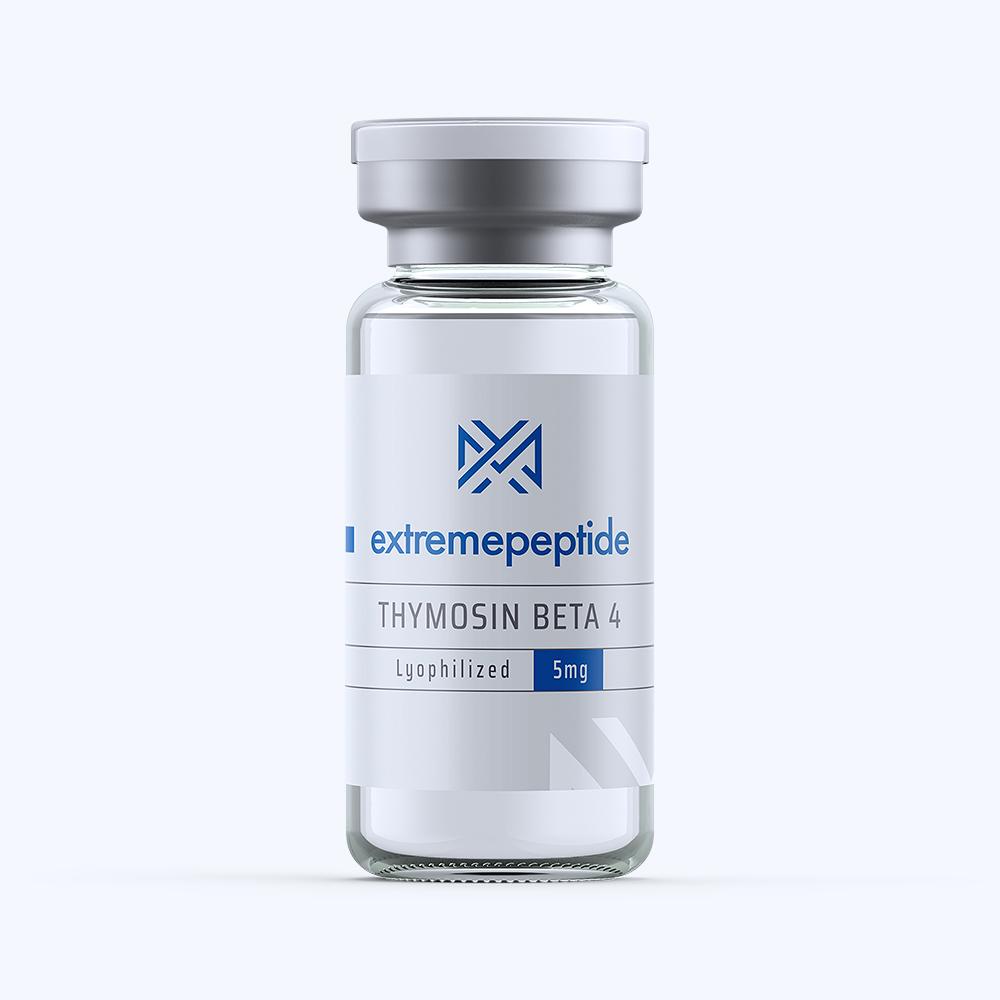
Thymosin Beta-4 (TB-500) Full-Length Peptide 5mg
Premium Research Peptide for Scientific and Laboratory Applications
Thymosin Beta-4 — Full-Length (43 aa; TB-500) 5mg Thymosin Beta-4 (TB-500) Full-Length Peptide 5mg is a synthetic version of the naturally occurring Thymosin Beta-4 protein fragment, consisting of 43 amino acids (43 aa). This peptide is widely recognized within the scientific community for its role in cellular research, tissue studies, and regenerative biology investigations. Manufactured to high-quality standards, TB-500 is commonly utilized in controlled laboratory environments by qualified researchers seeking to explore its biological properties and mechanisms of action Thymosin Beta-4 — Full-Length (43 aa; TB-500) 5mg.
As a full-length peptide, Thymosin Beta-4 maintains the complete 43-amino-acid sequence found in its naturally occurring form, making it a preferred choice for researchers requiring structural authenticity and consistency in experimental settings. The 5mg presentation provides a convenient quantity for research protocols while supporting accurate dosing and handling procedures in laboratory environments Thymosin Beta-4 — Full-Length (43 aa; TB-500) 5mg.
Key Features of Thymosin Beta-4 (TB-500) 5mg
- Full-length peptide containing 43 amino acids (43 aa)
- High-purity research-grade formulation
- Supplied in a convenient 5mg vial format
- Suitable for laboratory and scientific research applications
- Manufactured under strict quality control standards
- Designed for analytical, biochemical, and experimental studies
- Consistent peptide sequence for reproducible research outcomes
Understanding Thymosin Beta-4 (TB-500)
Thymosin Beta-4 is a naturally occurring peptide that has attracted significant attention in scientific research due to its involvement in various cellular processes. Researchers have studied its relationship with cell migration, actin regulation, tissue remodeling, and biological repair mechanisms. These characteristics have made TB-500 a valuable subject in fields such as regenerative biology, molecular science, and peptide research Thymosin Beta-4 — Full-Length (43 aa; TB-500) 5mg.
The full-length version of TB-500 contains the complete amino acid chain, allowing researchers to investigate its natural structural and functional characteristics. This makes it particularly useful for studies requiring a comprehensive understanding of peptide interactions and biological pathways.
Research Applications
Scientists utilize Thymosin Beta-4 in a variety of research areas, including:
- Cellular signaling studies
- Tissue regeneration research
- Protein interaction analysis
- Peptide structure-function investigations
- Molecular biology experiments
- Regenerative science exploration
- Biochemical pathway research
Its versatility and biological relevance continue to support ongoing academic and laboratory-based studies worldwide.
Quality and Purity Standards
Research-Grade Manufacturing
High-quality Thymosin Beta-4 (TB-500) 5mg products are manufactured using advanced peptide synthesis technologies and rigorous purification processes. These standards help ensure peptide integrity, sequence accuracy, and batch-to-batch consistency.
Every stage of production, from synthesis to packaging, is designed to meet strict quality requirements. This commitment to excellence helps researchers obtain reliable materials suitable for scientific investigation and analytical applications Thymosin Beta-4 — Full-Length (43 aa; TB-500) 5mg.
Storage and Handling Considerations
To maintain peptide stability and integrity, proper storage and handling procedures are essential. Researchers should follow established laboratory protocols and manufacturer recommendations regarding storage conditions, reconstitution practices, and long-term preservation.
Maintaining appropriate environmental conditions can help support the quality of the peptide throughout its intended research lifecycle.
Why Researchers Choose Full-Length TB-500
Structural Authenticity
One of the primary advantages of full-length Thymosin Beta-4 is its complete 43-amino-acid structure. This allows researchers to study the peptide in a form that closely resembles its naturally occurring counterpart, supporting more comprehensive scientific investigations.
Consistent Research Performance
Researchers value TB-500 for its well-documented presence in peptide and cellular biology literature. The complete sequence provides a reliable foundation for experimental protocols focused on understanding biological mechanisms and peptide behavior.
Important Research Notice
Thymosin Beta-4 (TB-500) Full-Length Peptide 5mg is intended exclusively for laboratory research, scientific analysis, and educational purposes. It is not approved for human consumption, therapeutic use, diagnosis, treatment, or prevention of any disease. All research involving this peptide should be conducted by qualified professionals in accordance with applicable regulations and institutional guidelines.
Conclusion
Thymosin Beta-4 (TB-500) Full-Length Peptide 5mg is a premium research-grade peptide designed to support advanced scientific investigations. Featuring the complete 43-amino-acid sequence, high purity standards, and broad relevance across multiple research disciplines, it remains a valuable tool for laboratories exploring cellular biology, regenerative science, and peptide function. Its structural authenticity and research versatility make it a trusted choice for professionals seeking consistent and reliable peptide materials for scientific applications.