Sale!

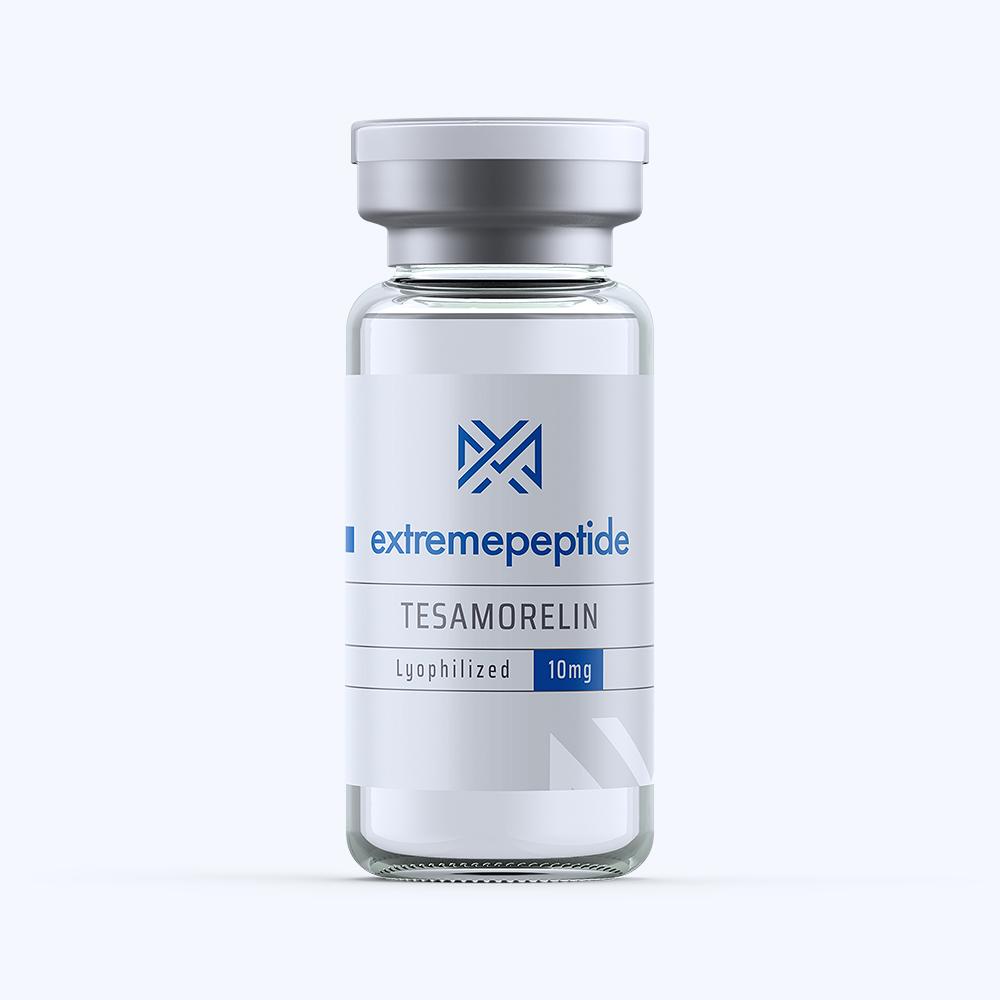
Tesamorelin 10mg

Original price was: $109.99.Current price is: $99.99.

& Free Shipping
Guaranteed Safe Checkout

Tesamorelin 10mg: A Professional Guide to Benefits, Uses, and Clinical Significance

Tesamorelin 10mg is a synthetic growth hormone-releasing hormone (GHRH) analog designed to stimulate the body’s natural production of growth hormone. It has gained significant attention in the medical and research communities for its ability to support metabolic function, body composition management, and growth hormone regulation. Originally developed for specific therapeutic applications, Tesamorelin has become a widely discussed peptide due to its unique mechanism of action and potential benefits.

Unlike direct growth hormone administration, Tesamorelin works by encouraging the pituitary gland to release endogenous growth hormone, helping maintain physiological hormone patterns. This targeted approach has made it an important subject of clinical research and medical interest.


H2: What Is Tesamorelin 10mg?

Tesamorelin 10mg is a stabilized synthetic peptide consisting of 44 amino acids that closely resembles naturally occurring growth hormone-releasing hormone. By binding to GHRH receptors in the pituitary gland, it promotes the secretion of growth hormone (GH), which subsequently increases insulin-like growth factor-1 (IGF-1) production.

The peptide is primarily recognized for its role in reducing excess visceral adipose tissue and supporting metabolic health. Due to its selective action, Tesamorelin may offer advantages over direct hormone replacement approaches by preserving the body’s natural endocrine feedback mechanisms.

Key characteristics of Tesamorelin 10mg include:

  • Stimulates natural growth hormone release
  • Supports healthy IGF-1 production
  • Encourages favorable body composition changes
  • Promotes metabolic efficiency
  • Maintains physiological hormone regulation

Its unique pharmacological profile has positioned Tesamorelin as one of the most extensively studied growth hormone secretagogues available today.


H3: Potential Benefits of Tesamorelin 10mg

Tesamorelin has been investigated in numerous clinical studies for its effects on growth hormone secretion and metabolic outcomes. While individual results may vary, research suggests several potential benefits.

Reduction of Visceral Fat

One of the most notable areas of study involves Tesamorelin’s ability to reduce visceral adipose tissue, commonly known as abdominal fat surrounding internal organs. Excess visceral fat is associated with increased cardiometabolic risks, making its reduction a significant health objective.

Enhanced Growth Hormone Activity

By stimulating the body’s own growth hormone production, Tesamorelin may help support:

  • Protein synthesis
  • Cellular repair processes
  • Muscle maintenance
  • Recovery and regeneration

Improved Body Composition

Research has demonstrated that increased growth hormone activity can contribute to improved body composition by supporting lean body mass while reducing excess fat accumulation.

Metabolic Support

Tesamorelin may positively influence metabolic function through its impact on growth hormone and IGF-1 levels. Healthy metabolic activity is essential for energy utilization, nutrient processing, and overall physiological performance.

Support for Healthy Aging Research

As growth hormone production naturally declines with age, Tesamorelin has become a topic of interest in longevity and healthy aging research. Scientists continue to investigate its potential role in supporting age-related physiological changes.


H4: Mechanism of Action and Clinical Importance

Tesamorelin functions by mimicking endogenous growth hormone-releasing hormone, activating receptors within the anterior pituitary gland. This stimulation triggers a cascade of hormonal events:

  1. Activation of GHRH receptors
  2. Increased growth hormone secretion
  3. Elevated IGF-1 production
  4. Enhanced metabolic and anabolic signaling

This mechanism differentiates Tesamorelin from exogenous growth hormone therapies because it leverages the body’s natural regulatory pathways. As a result, hormone release remains more physiologically controlled.

The clinical significance of Tesamorelin lies in its ability to address growth hormone insufficiency-related metabolic concerns while maintaining endocrine balance. Ongoing studies continue to explore additional therapeutic and research applications.


Why Tesamorelin 10mg Continues to Gain Attention

The growing popularity of Tesamorelin 10mg can be attributed to its scientifically validated mechanism, extensive clinical research, and potential benefits for body composition and metabolic health. Its capacity to stimulate natural growth hormone production distinguishes it from many alternative peptide therapies and has contributed to its increasing recognition among healthcare professionals and researchers.

As interest in peptide science expands, Tesamorelin remains a leading compound in discussions surrounding growth hormone regulation, metabolic optimization, and advanced peptide research.
CID

16137828

CAS

218949-48-5

InChI

InChI=1S/C221H366N72O67S/c1-25-28-30-53-163(308)260-145(92-120-54-58-122(299)59-55-120)198(343)255-116(21)179(324)276-150(96-169(316)317)199(344)256-117(22)180(325)291-172(111(16)26-2)214(359)284-147(91-119-43-31-29-32-44-119)206(351)293-174(118(23)298)215(360)285-149(95-162(230)307)205(350)289-155(104-297)210(355)280-146(93-121-56-60-123(300)61-57-121)203(348)267-130(51-41-83-248-220(240)241)186(331)266-126(46-34-36-78-223)197(342)290-171(110(14)15)212(357)283-141(87-106(6)7)183(328)252-100-166(311)258-133(63-70-157(225)302)190(335)278-144(90-109(12)13)202(347)288-152(101-294)208(353)257-115(20)178(323)262-128(49-39-81-246-218(236)237)185(330)265-125(45-33-35-77-222)189(334)277-143(89-108(10)11)201(346)279-142(88-107(8)9)200(345)272-137(66-73-160(228)305)195(340)282-151(97-170(318)319)207(352)292-173(112(17)27-3)213(358)274-139(76-85-361-24)196(341)287-153(102-295)209(354)268-131(52-42-84-249-221(242)243)187(332)270-135(64-71-158(226)303)192(337)269-132(62-69-156(224)301)182(327)251-99-165(310)259-134(67-74-167(312)313)191(336)286-154(103-296)211(356)281-148(94-161(229)306)204(349)273-136(65-72-159(227)304)193(338)271-138(68-75-168(314)315)194(339)264-124(47-37-79-244-216(232)233)181(326)250-98-164(309)253-113(18)176(321)261-127(48-38-80-245-217(234)235)184(329)254-114(19)177(322)263-129(50-40-82-247-219(238)239)188(333)275-140(175(231)320)86-105(4)5/h28-32, 43-44, 54-61, 105-118, 124-155, 171-174, 294-300H, 25-27, 33-42, 45-53, 62-104, 222-223H2, 1-24H3, (H2, 224, 301)(H2, 225, 302)(H2, 226, 303)(H2, 227, 304)(H2, 228, 305)(H2, 229, 306)(H2, 230, 307)(H2, 231, 320)(H, 250, 326)(H, 251, 327)(H, 252, 328)(H, 253, 309)(H, 254, 329)(H, 255, 343)(H, 256, 344)(H, 257, 353)(H, 258, 311)(H, 259, 310)(H, 260, 308)(H, 261, 321)(H, 262, 323)(H, 263, 322)(H, 264, 339)(H, 265, 330)(H, 266, 331)(H, 267, 348)(H, 268, 354)(H, 269, 337)(H, 270, 332)(H, 271, 338)(H, 272, 345)(H, 273, 349)(H, 274, 358)(H, 275, 333)(H, 276, 324)(H, 277, 334)(H, 278, 335)(H, 279, 346)(H, 280, 355)(H, 281, 356)(H, 282, 340)(H, 283, 357)(H, 284, 359)(H, 285, 360)(H, 286, 336)(H, 287, 341)(H, 288, 347)(H, 289, 350)(H, 290, 342)(H, 291, 325)(H, 292, 352)(H, 293, 351)(H, 312, 313)(H, 314, 315)(H, 316, 317)(H, 318, 319)(H4, 232, 233, 244)(H4, 234, 235, 245)(H4, 236, 237, 246)(H4, 238, 239, 247)(H4, 240, 241, 248)(H4, 242, 243, 249)/b30-28+/t111-, 112-, 113-, 114-, 115-, 116-, 117-, 118+, 124-, 125-, 126-, 127-, 128-, 129-, 130-, 131-, 132-, 133-, 134-, 135-, 136-, 137-, 138-, 139-, 140-, 141-, 142-, 143-, 144-, 145-, 146-, 147-, 148-, 149-, 150-, 151-, 152-, 153-, 154-, 155-, 171-, 172-, 173-, 174-/m0/s1

InChIKey

QBEPNUQJQWDYKU-BMGKTWPMSA-N

Isomeric SMILES

CC/C=C/CC(=O)N[C@@H](CC1=CC=C(C=C1)O)C(=O)N[C@@H](C)C(=O)N[C@@H](CC(=O)O)C(=O)N[C@@H](C)C(=O)N[C@@H]([C@@H](C)CC)C(=O)N[C@@H](CC2=CC=CC=C2)C(=O)N[C@@H]([C@@H](C)O)C(=O)N[C@@H](CC(=O)N)C(=O)N[C@@H](CO)C(=O)N[C@@H](CC3=CC=C(C=C3)O)C(=O)N[C@@H](CCCNC(=N)N)C(=O)N[C@@H](CCCCN)C(=O)N[C@@H](C(C)C)C(=O)N[C@@H](CC(C)C)C(=O)NCC(=O)N[C@@H](CCC(=O)N)C(=O)N[C@@H](CC(C)C)C(=O)N[C@@H](CO)C(=O)N[C@@H](C)C(=O)N[C@@H](CCCNC(=N)N)C(=O)N[C@@H](CCCCN)C(=O)N[C@@H](CC(C)C)C(=O)N[C@@H](CC(C)C)C(=O)N[C@@H](CCC(=O)N)C(=O)N[C@@H](CC(=O)O)C(=O)N[C@@H]([C@@H](C)CC)C(=O)N[C@@H](CCSC)C(=O)N[C@@H](CO)C(=O)N[C@@H](CCCNC(=N)N)C(=O)N[C@@H](CCC(=O)N)C(=O)N[C@@H](CCC(=O)N)C(=O)NCC(=O)N[C@@H](CCC(=O)O)C(=O)N[C@@H](CO)C(=O)N[C@@H](CC(=O)N)C(=O)N[C@@H](CCC(=O)N)C(=O)N[C@@H](CCC(=O)O)C(=O)N[C@@H](CCCNC(=N)N)C(=O)NCC(=O)N[C@@H](C)C(=O)N[C@@H](CCCNC(=N)N)C(=O)N[C@@H](C)C(=O)N[C@@H](CCCNC(=N)N)C(=O)N[C@@H](CC(C)C)C(=O)N

Canonical SMILES

CCC=CCC(=O)NC(CC1=CC=C(C=C1)O)C(=O)NC(C)C(=O)NC(CC(=O)O)C(=O)NC(C)C(=O)NC(C(C)CC)C(=O)NC(CC2=CC=CC=C2)C(=O)NC(C(C)O)C(=O)NC(CC(=O)N)C(=O)NC(CO)C(=O)NC(CC3=CC=C(C=C3)O)C(=O)NC(CCCNC(=N)N)C(=O)NC(CCCCN)C(=O)NC(C(C)C)C(=O)NC(CC(C)C)C(=O)NCC(=O)NC(CCC(=O)N)C(=O)NC(CC(C)C)C(=O)NC(CO)C(=O)NC(C)C(=O)NC(CCCNC(=N)N)C(=O)NC(CCCCN)C(=O)NC(CC(C)C)C(=O)NC(CC(C)C)C(=O)NC(CCC(=O)N)C(=O)NC(CC(=O)O)C(=O)NC(C(C)CC)C(=O)NC(CCSC)C(=O)NC(CO)C(=O)NC(CCCNC(=N)N)C(=O)NC(CCC(=O)N)C(=O)NC(CCC(=O)N)C(=O)NCC(=O)NC(CCC(=O)O)C(=O)NC(CO)C(=O)NC(CC(=O)N)C(=O)NC(CCC(=O)N)C(=O)NC(CCC(=O)O)C(=O)NC(CCCNC(=N)N)C(=O)NCC(=O)NC(C)C(=O)NC(CCCNC(=N)N)C(=O)NC(C)C(=O)NC(CCCNC(=N)N)C(=O)NC(CC(C)C)C(=O)N

IUPAC Name

(4S)-4-[[2-[[(2S)-5-amino-2-[[(2S)-5-amino-2-[[(2S)-2-[[(2S)-2-[[(2S)-2-[[(2S, 3S)-2-[[(2S)-2-[[(2S)-5-amino-2-[[(2S)-2-[[(2S)-2-[[(2S)-6-amino-2-[[(2S)-2-[[(2S)-2-[[(2S)-2-[[(2S)-2-[[(2S)-5-amino-2-[[2-[[(2S)-2-[[(2S)-2-[[(2S)-6-amino-2-[[(2S)-2-[[(2S)-2-[[(2S)-2-[[(2S)-4-amino-2-[[(2S, 3R)-2-[[(2S)-2-[[(2S, 3S)-2-[[(2S)-2-[[(2S)-3-carboxy-2-[[(2S)-2-[[(2S)-2-[[(E)-hex-3-enoyl]amino]-3-(4-hydroxyphenyl)propanoyl]amino]propanoyl]amino]propanoyl]amino]propanoyl]amino]-3-methylpentanoyl]amino]-3-phenylpropanoyl]amino]-3-hydroxybutanoyl]amino]-4-oxobutanoyl]amino]-3-hydroxypropanoyl]amino]-3-(4-hydroxyphenyl)propanoyl]amino]-5-carbamimidamidopentanoyl]amino]hexanoyl]amino]-3-methylbutanoyl]amino]-4-methylpentanoyl]amino]acetyl]amino]-5-oxopentanoyl]amino]-4-methylpentanoyl]amino]-3-hydroxypropanoyl]amino]propanoyl]amino]-5-carbamimidamidopentanoyl]amino]hexanoyl]amino]-4-methylpentanoyl]amino]-4-methylpentanoyl]amino]-5-oxopentanoyl]amino]-3-carboxypropanoyl]amino]-3-methylpentanoyl]amino]-4-methylsulfanylbutanoyl]amino]-3-hydroxypropanoyl]amino]-5-carbamimidamidopentanoyl]amino]-5-oxopentanoyl]amino]-5-oxopentanoyl]amino]acetyl]amino]-5-[[(2S)-1-[[(2S)-4-amino-1-[[(2S)-5-amino-1-[[(2S)-1-[[(2S)-1-[[2-[[(2S)-1-[[(2S)-1-[[(2S)-1-[[(2S)-1-[[(2S)-1-amino-4-methyl-1-oxopentan-2-yl]amino]-5-carbamimidamido-1-oxopentan-2-yl]amino]-1-oxopropan-2-yl]amino]-5-carbamimidamido-1-oxopentan-2-yl]amino]-1-oxopropan-2-yl]amino]-2-oxoethyl]amino]-5-carbamimidamido-1-oxopentan-2-yl]amino]-4-carboxy-1-oxobutan-2-yl]amino]-1, 5-dioxopentan-2-yl]amino]-1, 4-dioxobutan-2-yl]amino]-3-hydroxy-1-oxopropan-2-yl]amino]-5-oxopentanoic acid

Molecular Formula

C221H366N72O67S

Molecular Weight

5136

Monoisotopic Mass

5132.7166406

Polar Area

2360

Complexity

12800

XLogP

-23.3

Heavy Atom Count

361

Hydrogen Bond Donor Count

83

Hydrogen Bond Acceptor Count

76

Rotatable Bond Count

187

Physical Appearance

Fine White Lyophilized Powder

Stability

Lyophilized protein is to be stored at -20°C. It is recommended to aliquot the reconstituted (dissolved) protein into several discrete vials in order to avoid repeated freezing and thawing. Reconstituted protein can be stored at 4°C